
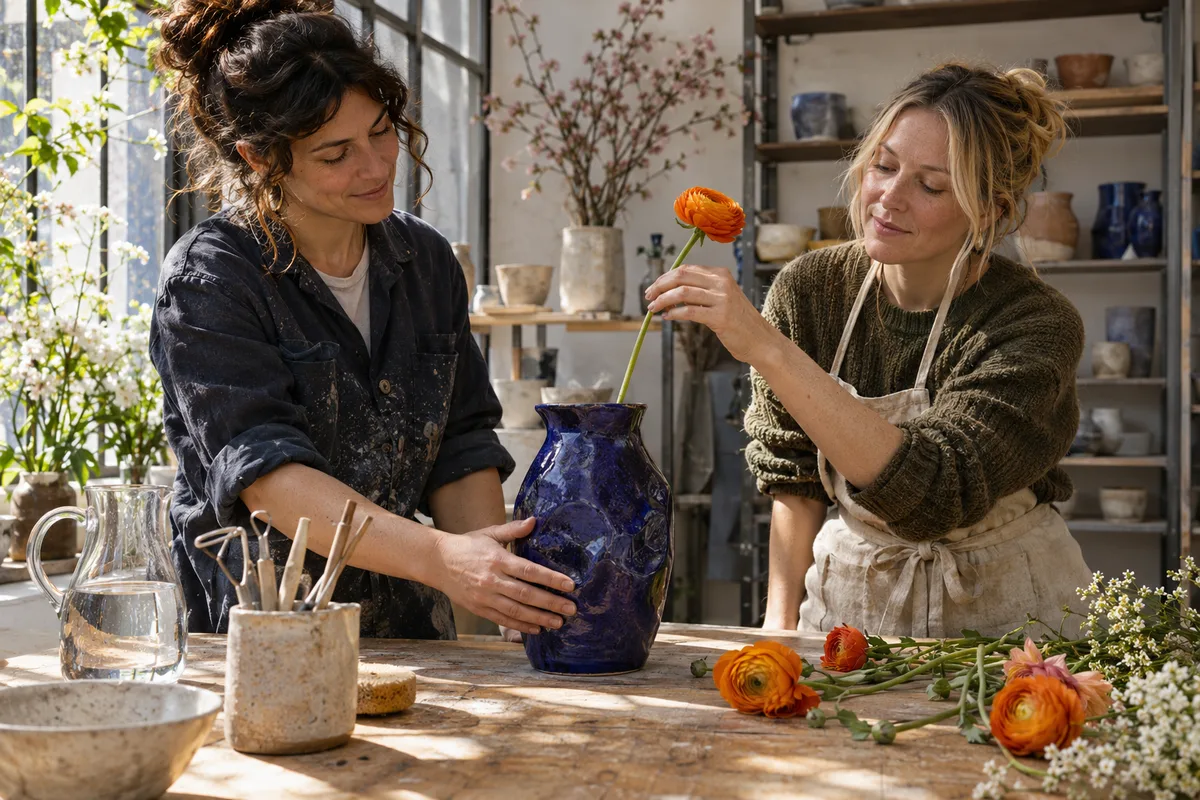
Give both creators a reason to be on the same post
An Instagram Collab lets accounts co-author a feed post, carousel, or Reel. The invited account must accept before it appears as a collaboration. Choose a question that genuinely benefits from both people’s work.
A florist and a ceramicist plan one post
Suppose customers keep asking why a bouquet looks different when they get it home. The florist knows how the stems spread. The ceramicist knows how the vase opening holds them. Together they can show the same stems arranged in two vessels and explain what changed.
- Write a one-sentence brief. “Show how the width of the vase opening changes the shape of a small bouquet.” Agree on that sentence before choosing a format.
- Split the work. The ceramicist brings and measures the vessels. The florist uses the same stems in both arrangements. Photograph both from the same angle so a viewer can see the difference.
- Agree on the final frame. Credit each maker and decide where questions about stems, vessels, or an upcoming workshop should go. Check any dates, prices, image permissions, and commercial relationship disclosures together.
- Send the collaborator invitation. The publishing account adds the other account as a collaborator. Agree when the partner will review and accept. Check the published post from both profiles before directing customers to it.
A short invitation you can adapt
“Customers ask us which vase fits a hand-tied bouquet. Would you like to co-author a three-photo comparison? I can bring the flowers. Could you bring two vases and explain the difference in their openings? We’d both review the photos and caption before posting.”
Decide whether to do another one
Pick a shared measure before publishing. For a workshop, that might be inquiries that mention the demonstration. Have each partner record the questions they received. If several people ask about vase height, you have a grounded subject for a follow-up carousel.
For co-author invitations and acceptance, see Meta’s explanation of Instagram Collabs.
If your partner has already published the finished piece, you can repost their original with a note explaining your contribution.
Agree on what the audience will learn
The florist knows how stems behave in different openings. The ceramicist knows why two vases with similar heights support flowers differently. Ask each partner to write the question they can answer from experience. Put those questions together and you get a post about how a vase opening changes the arrangement. If the only shared subject is “we both make things,” the photographs will have to work much harder to explain why the accounts are appearing together.
Decide which audience needs the demonstration. A person buying a vase needs a clear view of the opening and a sense of scale. An experienced arranger may want to know how the stem length affects balance. Choose one first reader and write the image list for them. The partner with the larger audience does not automatically know which details matter to that reader.
Make a one-page agreement for the shoot
Write down who brings the flowers, who brings the vases and who can approve their use in the pictures. Assign someone to check the names of the materials and the finished dimensions. Confirm whether either partner expects to use the images elsewhere. If the two businesses have different booking links, choose which next step actually makes sense for this post. A viewer who wants to buy a vase should not have to guess whether the florist is handling orders.
On the day, put the same number and kind of stems into each vase before comparing the openings. Photograph the bases on the same surface with the camera at the same height. Add one image from above so the viewer can see why the arrangement spreads differently. If one vase is a prototype, say so before asking viewers to inquire about availability.
Handle invitations and changes
Agree which account will originate the post. Have both partners review the final crop and caption before the invitation goes out. The invited account needs to accept a Collab for it to appear as a co-authored post. Check from both profiles after acceptance. If a credit is wrong or stock sells out, the partners should know who can correct the original and who will answer the questions coming from each audience. Meta’s explanation of Instagram Collabs.
Is adding collaborators the same as tagging?
A tag identifies another account. An accepted Collab presents the work as co-authored. Agree on the arrangement before publication. Adding a tag should not come as a surprise to someone who understood they would be a joint author.
What if my partner already posted the work?
Ask what result the two of you want. If the original already contains the right credit and information, a repost with a useful note can introduce it to your followers. If the goal is a new joint demonstration, plan a separate piece with a clear role for each partner. Avoid copying a partner’s media into a new upload simply because an invitation was missed.
Split the follow-up work
Before publishing, give each partner a sample question to answer. If someone asks which stems fit the narrow neck, the florist can respond from the demonstration. If someone asks whether the vessel is watertight or available in another glaze, the ceramicist can give the verified answer. Keep the public replies consistent with what is actually for sale. A jointly credited post still needs a clear person responsible for a stock or booking decision.
Send the invitation from the draft
Select the photographs in the order you agreed and continue to the caption screen. Open Tag people, choose Invite collaborators and select the partner’s exact account. Return to the post, check the caption and share it. The partner should review the invitation and accept from their account if the published version matches the agreement. Reopen the post and check the author line together. Instagram’s mobile collaboration instructions.